The state
of play.
Every shot, every task, every version, and who each one is waiting on. Play is a production tracker for visual effects, animation and post that a crew keeps current, because keeping it current takes one keytap.
a working show in ten minutes · no card ·
A grid your crew already knows how to read.
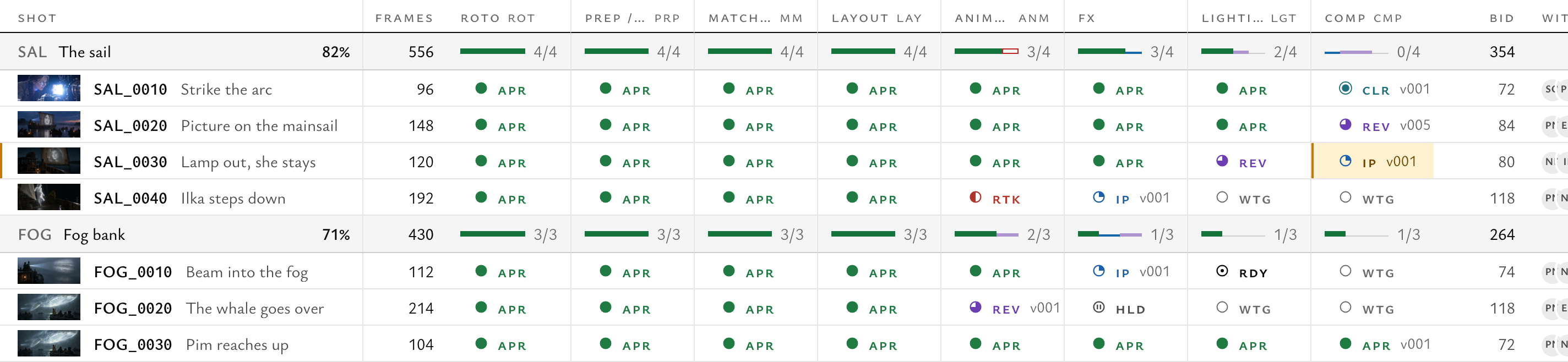
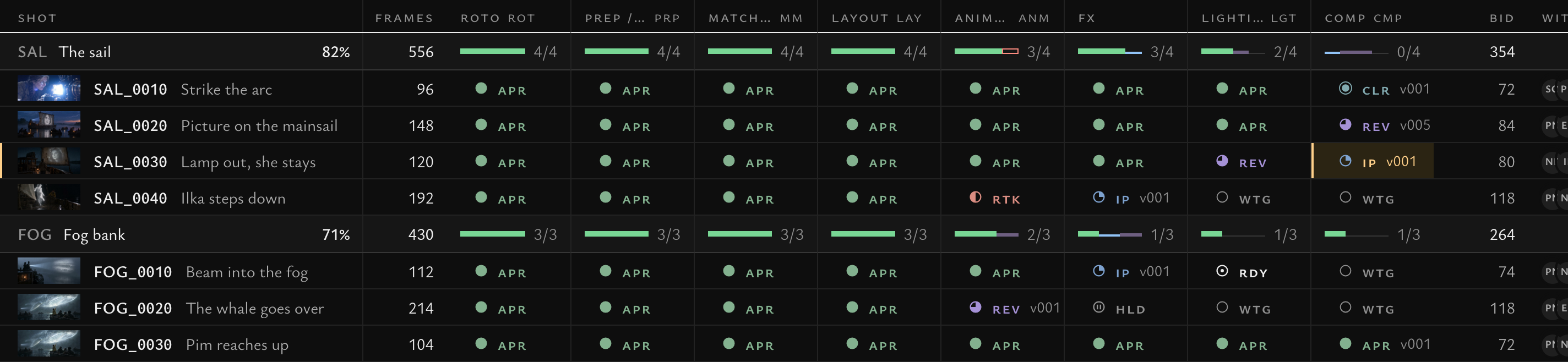
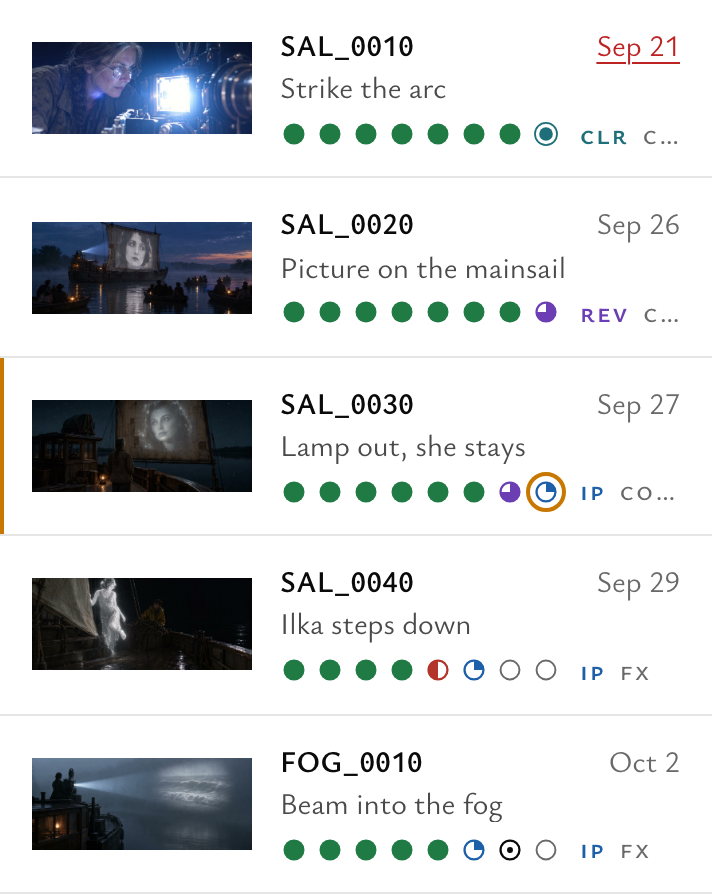
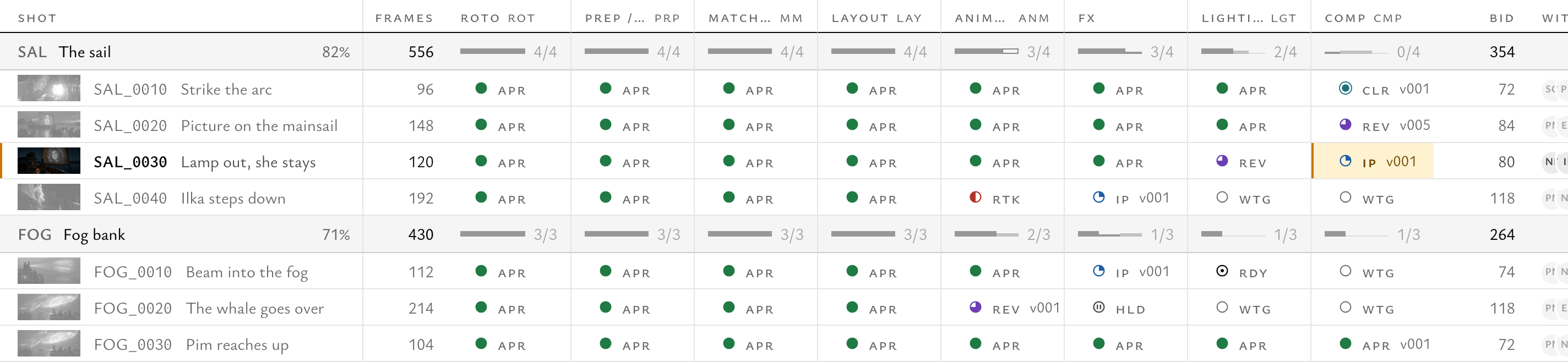
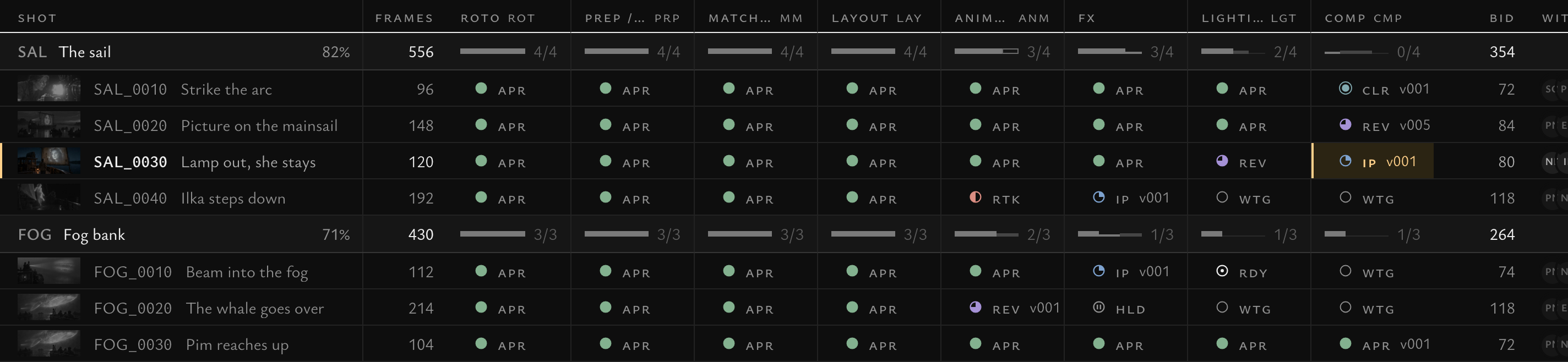
Rows are shots. Columns are pipeline steps. A cell is a task and its status, written in the letters production already says out loud. If you have run a show in a production tracker before, there is nothing here to relearn. There is only less to look at.
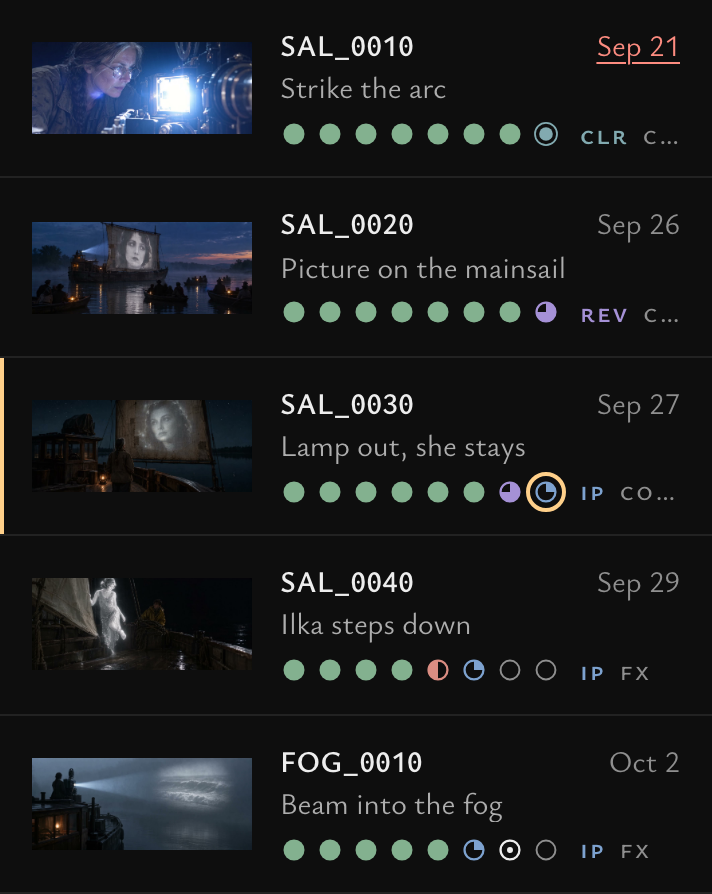
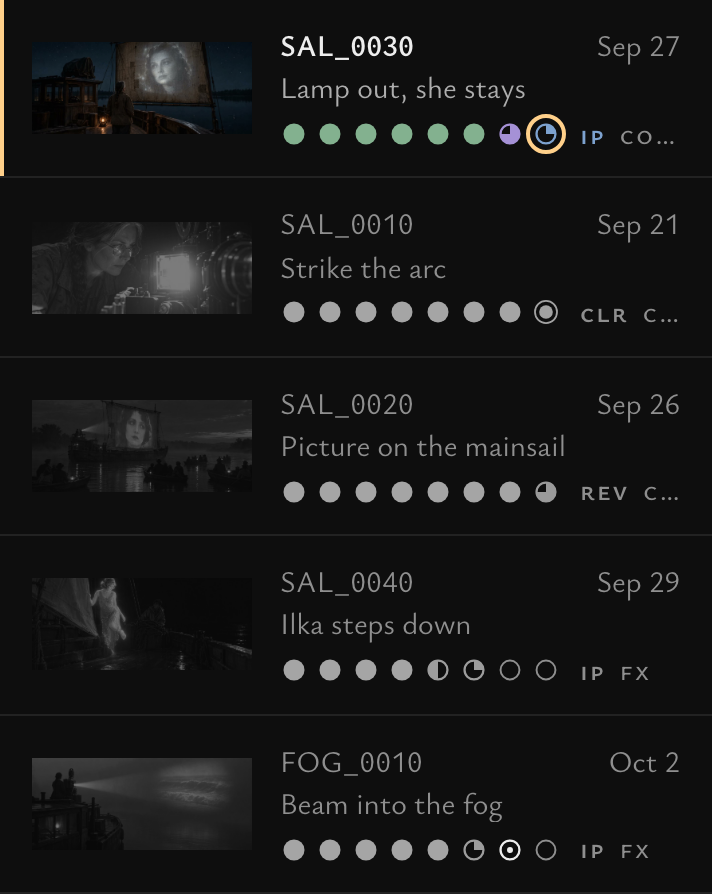
Status is a phase of light
Dark until work starts, filling as it moves, full when it is approved, and waning on the other side when it comes back. The shape says it without colour; the hue only agrees. Codes and names are your studio's data, not ours.
- wtgWaiting to start
- rdyReady to start
- ipIn progress
- revInternal review
- clrClient review
- rtkRetake
- hldOn hold
- aprApproved
- omtOmitted
The only warm thing on the screen is yours.
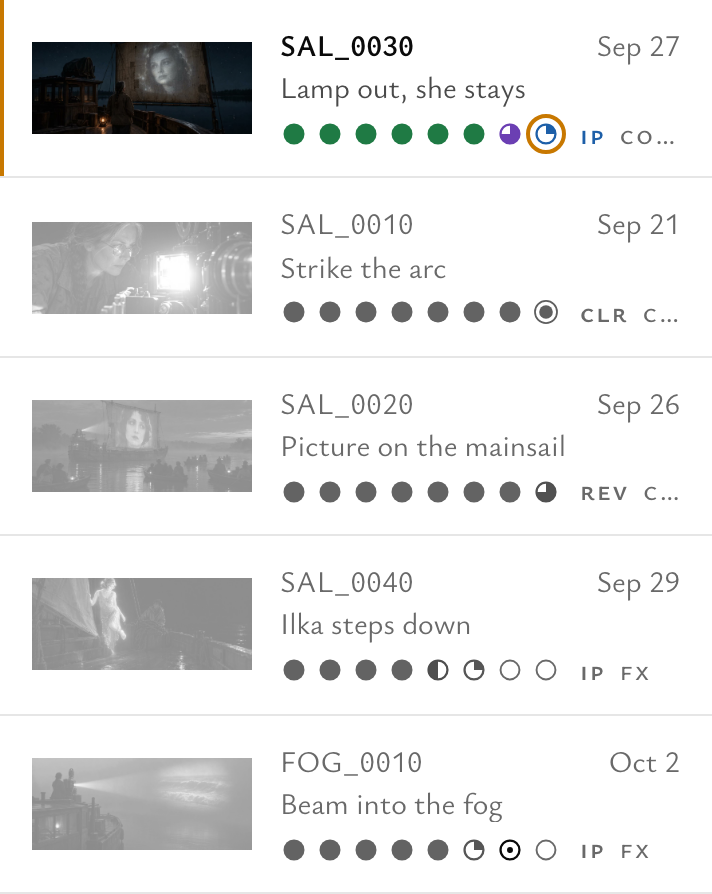
Every status knows who it is waiting on: the artist, the supervisor, the client, production. When the answer is you, the cell is lit, and nothing else on the page is. Press CTap My cue and the rest of the show steps back. Today, Elias has 2 cues in 124 tasks, and 13 things in the show are waiting on someone.
One keyOne tap
Arrow to the cell, press a number. Eight is approved.Tap the task, then tap its status. Nobody opens a form to say a shot moved, which is why people say it.
- 1Waiting to start
- 2Ready to start
- 3In progress
- 4Internal review
- 5Client review
- 6Retake
- 7On hold
- 8Approved
- 9Omitted
A dark, neutral room for the picture.
Review is the one place the interface gives way completely. The surround is one neutral grey under every theme, because a tinted room lies about a grade. Notes pin to a frame and a place in it. A approves, X sends it backOne button approves, the other sends it back with the notes attached, and the task's status follows without anyone touching the grid.
 12
Her face holds on the canvas now. Let the beam breathe a little more in the mist, it reads as a solid bar from frame 1090 on.
A show in ten minutes, not ten weeks.
Trackers fail at the start, by asking a studio to describe its whole world before it can log one shot. Play is opinionated first and flexible later: three templates cover most shows, and everything in them can be changed once the show is moving.
Pick a template
VFX shots, episodic animation, or commercial. Steps and statuses arrive set up.
Paste a shot list
From a spreadsheet or an editorial turnover. Codes become shots, prefixes become sequences.
Invite the crew
Artists see their cues. Supervisors see what is up for review. Each lands on the page that is theirs.
You already speak it
The words are the same because the work is the same. A shot list comes across as it is, from a spreadsheet or an editorial turnover: codes, names and frame counts. Statuses are set in the grid, one keytap each.
- your pages
- Views, saved per person or per show
- your fields
- Fields, shown or hidden per view
- your pipeline steps
- Steps, per kind of thing
- your status codes
- Statuses, with your letters and your order
- your versions and playlists
- Versions and playlists
- your notes
- Notes, pinned to a frame
One of three.
Play is the record of the work. It hands what it knows to the two products beside it, task for task, so a producer can ask what a late sequence costs and get a number.
- Play
- The work. Shots, tasks, statuses, versions, notes, review.
- Beat
- The hours. Time entries and approvals, against the same tasks.
- Wrap
- The money. Bid against actual, drift, and what is left in the show.
Put a show
in play.
or